

bollinger bands ®
Info
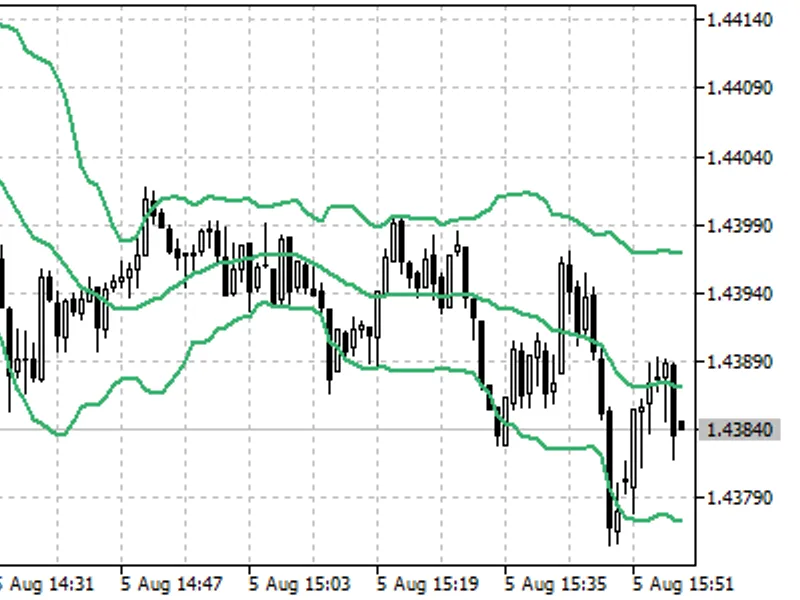
The bollinger bands ® is a Indicator for MetaTrader 5 that bollinger bands ® technical indicator (bb) is similar to envelopes, but with a key difference in how the bands are calculated. while envelopes plot bands a fixed percentage away from the moving average, bollinger bands use standard deviations to adjust the band width based on market volatility.
Usage
This tool is typically used for enhancing chart analysis and decision making.
Platform
This Indicator works exclusively on MetaTrader 5 (both build 600+ and newer versions).
Setup
Place the downloaded file in MQL5/Indicators folder via File ? Open Data Folder in MetaTrader 5.
How to Install and Use bollinger bands ®
1. Installation: Place your file in the MQL/Indicators folder via "Open Data Folder" and restart your terminal.
2. Loading: Find the indicator in the Navigator, drag it onto your chart, and configure the input parameters in the popup window.
3. Customization: Press Ctrl+I to open the indicator list, select your tool, and click "Properties" to change colors, levels, or visual styles.
4. Updating: Replace the old file in the Indicators folder with the new version and restart the platform to apply changes.
Frequently Asked Questions
Q: Why is my indicator not showing? A: Verify the file is in the MQL/Indicators folder, or try right-clicking the "Indicators" tree in the Navigator and clicking "Refresh."
Q: Do custom indicators slow down the platform? A: Too many complex indicators can impact performance; remove unused ones via the "Indicator List" (Ctrl+I).
Q: Can I use MT4 indicators on MT5? A: No, MQL4 and MQL5 are distinct languages; ensure the indicator is compiled specifically for your platform version.
What this tool does
bollinger bands ® technical indicator (bb) is similar to envelopes, but with a key difference in how the bands are calculated.
Typical Use Case
This Indicator excels in automated trading and technical analysis on MetaTrader 5.
Compatible Platform & Setup
This Indicator works on MetaTrader 5. Place the file in the MQL5/Indicators folder and restart the terminal.
Description & Settings
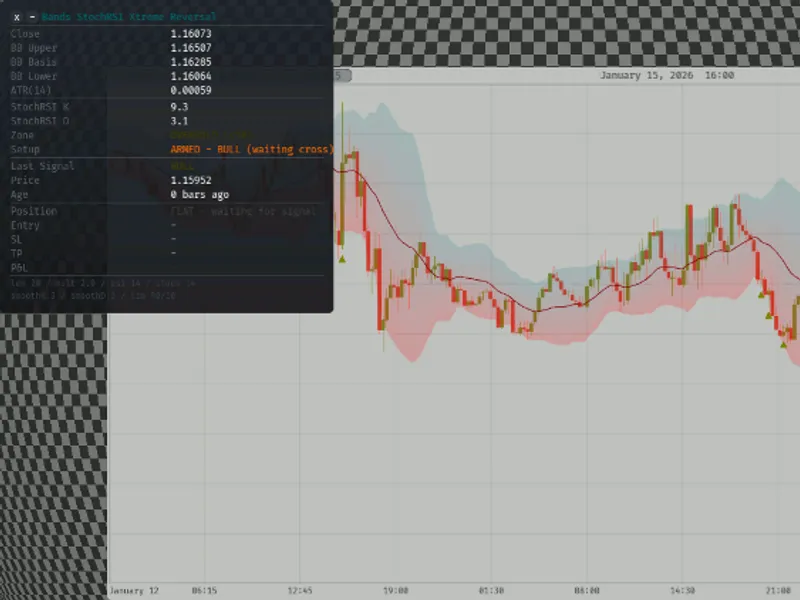
Related: Bands Stoch RSI Extreme Reversal Signals - another powerful indicator for MetaTrader 5 traders.
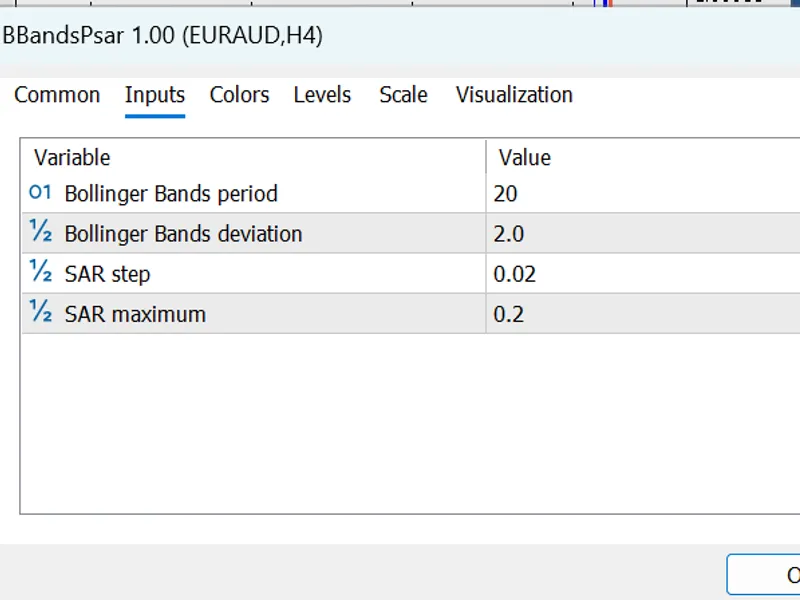
bollinger bands ® technical indicator (bb) is similar to envelopes, but with a key difference in how the bands are calculated. while envelopes plot bands a fixed percentage away from the moving average, bollinger bands use standard deviations to adjust the band width based on market volatility.Also recommended: B Bands Psar Indicator - similar indicator with strong performance on MetaTrader 5.
this indicator is designed to adapt to market conditions. when volatility increases, the bands widen, and during calmer periods, they contract.
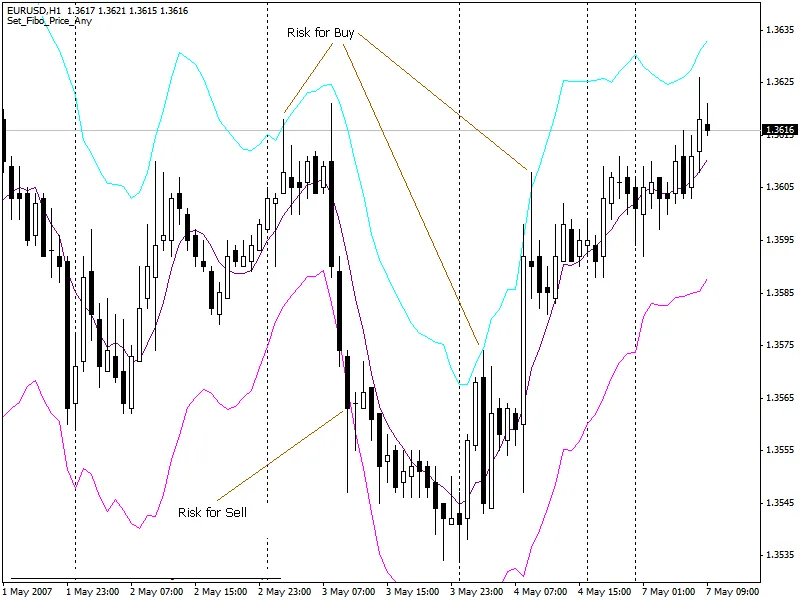
bollinger bands can be applied to price charts or indicator charts. the interpretation is based on the tendency of prices to stay within the upper and lower bands. the variable width of the bands is a unique feature, reflecting the volatility of prices.
here are some key characteristics:
- price breakouts often occur after a period of low volatility, causing the bands to contract.
- if prices break through the upper band, it suggests a continuation of the current trend.
- when price spikes outside the band are followed by spikes inside the band, a trend reversal may be imminent.
- price movements starting from one band line often reach the opposite line.
the bollinger band indicator consists of three lines:
- middle line (ml): a simple moving average of closing prices over n periods.
- top line (tl): the middle line plus a multiple of standard deviation (d).
- bottom line (bl): the middle line minus the same multiple of standard deviation.
the standard deviation (stddev) is calculated as the square root of the sum of squared differences between closing prices and the simple moving average, divided by the number of periods.
it is recommended to use a 20-period simple moving average as the middle line and set the top and bottom lines two standard deviations away. moving averages with fewer than 10 periods may not be as effective.
You may also like: bollinger bands 3 sigma - excellent alternative for indicator users on MetaTrader 5.
Source Code
#property copyright "robotfx"
#property link "https://robotfx.org"
#property description "this code is educational. feel free to use, modify and upgrade as you wish. visit robotfx.org for professional trading tools"
#include <movingaverages.mqh>
#property indicator_chart_window
#property indicator_buffers 4
#property indicator_plots   3
#property indicator_type1   draw_line
#property indicator_color1  lightseagreen
#property indicator_type2   draw_line
.......
⚠ Limitations & Risk Warning
- This tool is provided for educational and testing purposes only.
- Past performance does not guarantee future results.
- Trading involves substantial risk of loss. Use on a demo account first.
- Results may vary depending on market conditions, broker, and settings.
- We recommend thorough backtesting and forward testing before using with real funds.