Market Structure Onnx
This is a powerful addition to your MetaTrader 5 toolkit designed to optimize market analysis and performance. This Expert Advisor serves as automated trading software. It is utilized to monitor financial markets and execute trades based on predefined algorithmic rules, enabling precise position management without the need for constant manual oversight.
How to Setup and Use Market Structure Onnx
1. Installation: Open the "File" menu, select "Open Data Folder," navigate to MQL/Experts, paste your file, and restart the terminal.
2. Activation: Drag the EA from the Navigator onto a chart, ensure "Allow live trading" is checked in the Common tab, and verify the AutoTrading button is green.
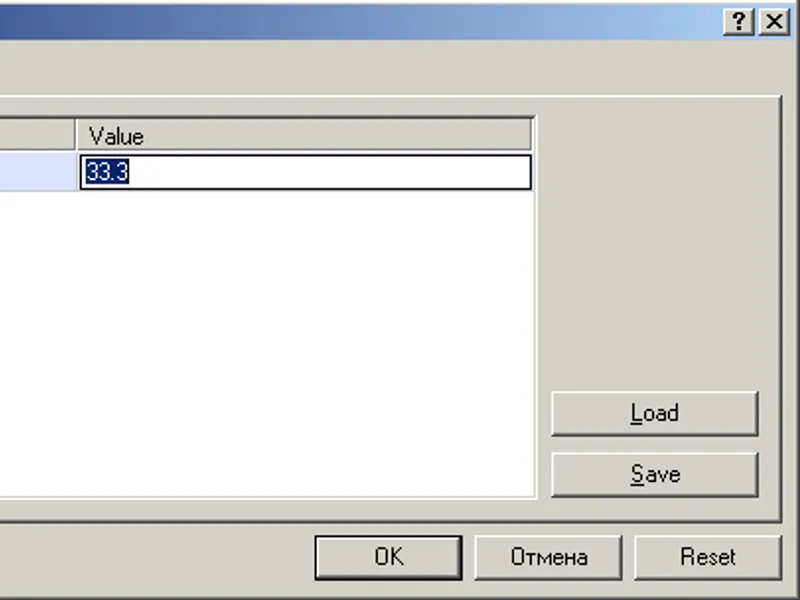
3. Optimization: Right-click your chart, choose "Expert List," click "Properties" to adjust inputs, and save your preferred setup as a set file for future use.
4. Maintenance: Regularly check the "Experts" tab in the terminal window to monitor trade logs and potential execution errors.
Frequently Asked Questions
Q: Why is my EA not opening trades? A: Check the "AutoTrading" button, ensure "Allow live trading" is enabled, and verify your broker allows automated trading on your account type.
Q: Can I run multiple EAs on one chart? A: No, each chart can only host one active EA; however, you can open multiple charts for different currency pairs to run several EAs.
Q: What does the "smiley face" icon mean? A: A smiley face in the top-right corner of the chart indicates the EA is successfully running; a frowny face means it is disabled.
Description & Settings
This strategy combines
machine learning–based market structure classification
with
rule-based trade execution
. An ONNX model is used to classify the current market structure, while classical technical analysis (moving average trend filter, Fibonacci retracement, ATR, and risk–reward rules) is used to manage entries, exits, and risk.
The system is designed to:
Trade
only at structurally meaningful pullback levels
Avoid overtrading by allowing
only one active trade or pending order
Use
probability confidence filtering
from the AI model
Apply
risk-reward–based trailing stop management 2. Market Structure Classification Using AI
An ONNX model ( market_structure.onnx ) is loaded during initialization. On every new bar, the model predicts the
current market structure state
.
Input Features
The model receives six normalized features:
Momentum change
Price difference between the current close and the close 5 bars ago, normalized by ATR.
Distance to recent swing high
Difference between the highest high in the last 50 bars and the current close, normalized by ATR.
Distance to recent swing low
Difference between the current close and the lowest low in the last 50 bars, normalized by ATR.
Relative tick volume
Current tick volume compared to the average tick volume of the last 20 bars.
Candle body strength
Difference between close and open price, normalized by ATR.
Time feature (hour of day)
Encodes intraday session behavior.
These features allow the model to infer
trend strength, pullback depth, volatility, volume context, and session timing
.
3. Model Output and Confidence Filtering
The ONNX model outputs:
A
predicted label
representing market structure state (e.g., higher high, higher low, lower high, lower low)
A
probability score
for the predicted class
A trade signal is considered
valid only if
:
The prediction confidence is
above the defined threshold
(default 0.65)
The signal aligns with the higher-timeframe trend filter
This ensures that
low-confidence or noisy signals are ignored
.
4. Trend Direction Filter
A
50-period Simple Moving Average (SMA)
is used as a directional filter:
Bullish bias
: price is above the SMA
Bearish bias
: price is below the SMA
Trade directions are constrained as follows:
Bullish market structure signals are allowed
only in bullish trend
Bearish market structure signals are allowed
only in bearish trend
This prevents counter-trend entries.
5. Entry Logic Using Fibonacci Retracement
Instead of market orders, the strategy uses
pending limit orders
at Fibonacci retracement levels.
Pivot Detection
Recent swing high and swing low are detected using a
pivot-based method
that scans historical highs and lows.
Fibonacci Entry
Entry is placed at a predefined Fibonacci retracement level (default
61.8%
)
This targets
pullbacks within a valid market structure
, not breakouts
Order Types
Buy Limit
in bullish conditions
Sell Limit
in bearish conditions
Each pending order has:
Fixed lot size
Stop Loss beyond the structure invalidation level
Take Profit based on a fixed
Risk-Reward ratio
(default 1:2)
Expiration time to avoid stale orders
6. Risk Management and Trade Limitation
The strategy enforces strict exposure control:
Only
one open position or one pending order
at a time
No stacking or martingale behavior
Stop Loss is always defined at entry
Risk is structurally bounded by:
Market structure invalidation
ATR-normalized distance
Fixed RR ratio
7. Trailing Stop Based on Risk-Reward Progress
Once a position is active, a
Risk-Reward–based trailing stop
is applied:
Trailing activates after price reaches a predefined fraction of the TP distance
Stop Loss is moved progressively toward breakeven and beyond
Trailing logic is symmetric for buy and sell positions
This approach:
Protects partial profits
Allows winners to extend
Avoids premature stop-outs caused by noise
8. Visual Feedback
When a trade setup is created:
A
Fibonacci object
is drawn on the chart
The object is automatically removed once all trades and pending orders are cleared
This helps visually confirm:
Market structure
Entry logic
Retracement validity
9. Summary of the Methodology
In summary, this strategy follows a
hybrid AI + rule-based methodology
:
AI classifies market structure using normalized, context-aware features
High-confidence predictions are filtered by trend direction
Trades are executed only at Fibonacci pullbacks within structure
Risk is controlled using fixed RR and structural stop placement
Profits are managed dynamically using RR-based trailing stops
The result is a
disciplined, structure-driven trading system
that uses AI for decision support rather than blind automation.