Download ALL MT5 indicators (5742)

Similar MetaTrader Tools









hacking objects in an ex5
Info
The hacking objects in an ex5 is a Indicator for MetaTrader 5 that this code demonstrates how you can modify the objects in an indicator without having the source code. there are some indicators that don't use buffers, they are only using objects.
Usage
This tool is typically used for enhancing chart analysis and decision making.
Platform
This Indicator works exclusively on MetaTrader 5 (both build 600+ and newer versions).
Setup
Place the downloaded file in MQL5/Indicators folder via File ? Open Data Folder in MetaTrader 5.
How to Install and Use hacking objects in an ex5
1. Installation: Place your file in the MQL/Indicators folder via "Open Data Folder" and restart your terminal.
2. Loading: Find the indicator in the Navigator, drag it onto your chart, and configure the input parameters in the popup window.
3. Customization: Press Ctrl+I to open the indicator list, select your tool, and click "Properties" to change colors, levels, or visual styles.
4. Updating: Replace the old file in the Indicators folder with the new version and restart the platform to apply changes.
Frequently Asked Questions
Q: Why is my indicator not showing? A: Verify the file is in the MQL/Indicators folder, or try right-clicking the "Indicators" tree in the Navigator and clicking "Refresh."
Q: Do custom indicators slow down the platform? A: Too many complex indicators can impact performance; remove unused ones via the "Indicator List" (Ctrl+I).
Q: Can I use MT4 indicators on MT5? A: No, MQL4 and MQL5 are distinct languages; ensure the indicator is compiled specifically for your platform version.
What this tool does
this code demonstrates how you can modify the objects in an indicator without having the source code.
Typical Use Case
This Indicator excels in automated trading and technical analysis on MetaTrader 5.
Compatible Platform & Setup
This Indicator works on MetaTrader 5. Place the file in the MQL5/Indicators folder and restart the terminal.
Description & Settings
Related: chart objects copy paste - another powerful indicator for MetaTrader 5 traders.
this code demonstrates how you can modify the objects in an indicator without having the source code. there are some indicators that don't use buffers, they are only using objects. it would be easy if inputs could be changed with icustom, but this is only possible if the indicator is using buffers to draw the elements. what if the indicator only uses objects?
Also recommended: frog jump - similar indicator with strong performance on MetaTrader 5.
for the demonstration, a free market indicator for mt5 called "pz multidiagonals mt5" is used. you would need to install this indicator from the market before attempting to test this code as it is.we need an object prefix name in order to begin manipulating the objects. the function logchartobjectnames() is created to log all of the names of the objects which exist in the indicator.
objects are then manipulated using the modifychartobjects() function which passes two parameters. the prefix name (which should be the beginning part of a descriptive object name), and an integer which is for passing how much objects should unmodified or "spared" for that particular object.
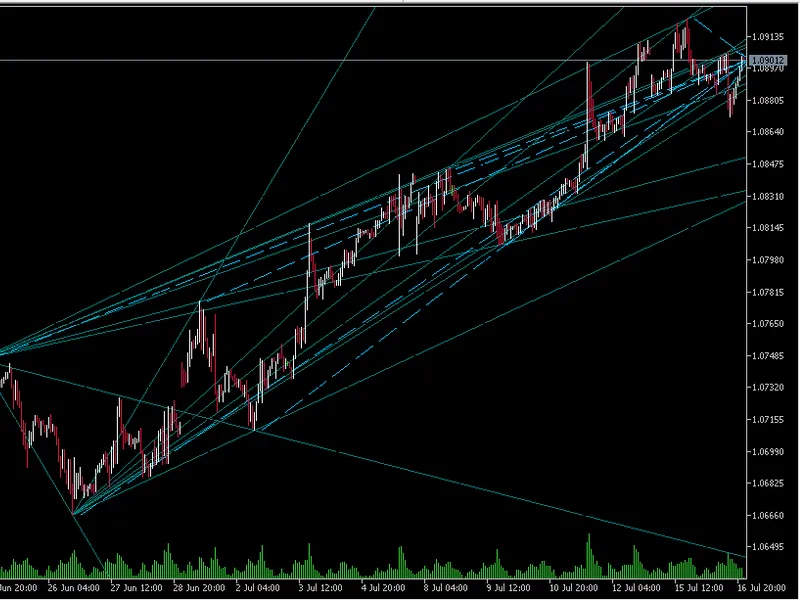
the pz multidiagonals indicator is a trend indicator which automatically draws trend lines, but goes a little overboard. here is how the default preset looks:
from the data window, it's evident that no buffers are used in this indicator. everything is constructed with objects.
now by starting from a clean chart, and loading this indicator "hacking objects.mq5", you will see how i removed a lot of the trend lines, and left what are in my opinion the most relevant not by accessing the inputs, but by hacking the objects:
You may also like: Two-Pole Super Smoother Filter Indicator - excellent alternative for indicator users on MetaTrader 5.
Source Code
#property copyright "RobotFX"
#property link "https://robotfx.org"
#property version   "1.00"
#property description "Educational code - RobotFX www.robotfx.org"
#define none 0
#property indicator_chart_window
#property indicator_buffers none
#property indicator_plots   none
string obj_prefix_1 = "PZMDALS-diagonal";
string obj_prefix_2 = "PZMDALS-confluence";
.......
⚠ Limitations & Risk Warning
- This tool is provided for educational and testing purposes only.
- Past performance does not guarantee future results.
- Trading involves substantial risk of loss. Use on a demo account first.
- Results may vary depending on market conditions, broker, and settings.
- We recommend thorough backtesting and forward testing before using with real funds.