


simple zz consolidation zones
Info
The simple zz consolidation zones is a Indicator for MetaTrader 5 that more experiments with the simple zigzag indicator. a small upgrade allows the indicator to find and mark the price consolidation areas with colored rectangles.
Usage
This tool is typically used for enhancing chart analysis and decision making.
Platform
This Indicator works exclusively on MetaTrader 5 (both build 600+ and newer versions).
Setup
Place the downloaded file in MQL5/Indicators folder via File ? Open Data Folder in MetaTrader 5.
How to Install and Use simple zz consolidation zones
1. Installation: Place your file in the MQL/Indicators folder via "Open Data Folder" and restart your terminal.
2. Loading: Find the indicator in the Navigator, drag it onto your chart, and configure the input parameters in the popup window.
3. Customization: Press Ctrl+I to open the indicator list, select your tool, and click "Properties" to change colors, levels, or visual styles.
4. Updating: Replace the old file in the Indicators folder with the new version and restart the platform to apply changes.
Frequently Asked Questions
Q: Why is my indicator not showing? A: Verify the file is in the MQL/Indicators folder, or try right-clicking the "Indicators" tree in the Navigator and clicking "Refresh."
Q: Do custom indicators slow down the platform? A: Too many complex indicators can impact performance; remove unused ones via the "Indicator List" (Ctrl+I).
Q: Can I use MT4 indicators on MT5? A: No, MQL4 and MQL5 are distinct languages; ensure the indicator is compiled specifically for your platform version.
What this tool does
more experiments with the simple zigzag indicator.
Typical Use Case
This Indicator excels in automated trading and technical analysis on MetaTrader 5.
Compatible Platform & Setup
This Indicator works on MetaTrader 5. Place the file in the MQL5/Indicators folder and restart the terminal.
Description & Settings
Related: Simple Countdown Timer for Next Candle - another powerful indicator for MetaTrader 5 traders.
more experiments with the simple zigzag indicator. a small upgrade allows the indicator to find and mark the price consolidation areas with colored rectangles.
Also recommended: Simple Clock Indicator - similar indicator with strong performance on MetaTrader 5.
the simple zigzag indicator is the development of an idea of automated visualization of technical analysis. we have started with a simple indicator that plots local highs and lows on a chart. our task now is to learn to recognize different patterns of technical analysis using the above indicator.the proposed indicator searches for flat consolidation zones on a price chart.
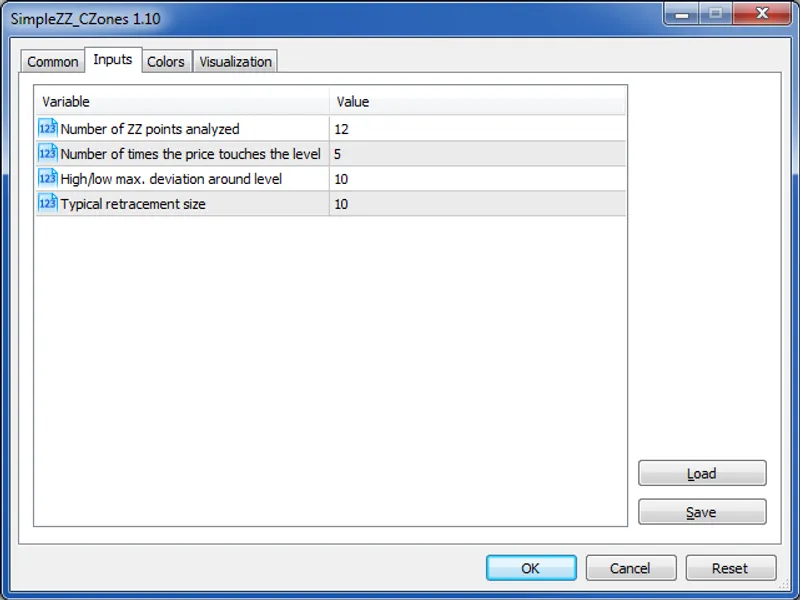
the number of highs/lows required for constructing a zone, the total number of analyzed zigzag points, and the accuracy of matching of extrema are defined by the three parameters of the indicator:
number of times the price touches the level.
number of zz points analyzed.
high/low max. deviation around level.
the fourth parameter - typical retracement size - is inherited from the parent indicator ().
the areas where several highs make up a line in the upper part of the zone are marked in red; the areas where several lows make up a line in the lower part of the zone are marked in blue. as for now, the indicator cannot be built into an expert advisor, because it doesn't have appropriate buffers for the area borders (expected later). we will further continue to complicate the recognized patters, and will adapt the indicator for use in automated trading systems.
You may also like: Simple Clock Indicator - excellent alternative for indicator users on MetaTrader 5.
Source Code
#property copyright "robotfx"
#property link "https://robotfx.org"
#property version   "1.10"
#property indicator_chart_window
#property indicator_buffers 1
#property indicator_plots   1
#property indicator_label1  "myzigzag"
#property indicator_type1   draw_section
#property indicator_color1  clrred
#property indicator_style1  style_solid
.......
⚠ Limitations & Risk Warning
- This tool is provided for educational and testing purposes only.
- Past performance does not guarantee future results.
- Trading involves substantial risk of loss. Use on a demo account first.
- Results may vary depending on market conditions, broker, and settings.
- We recommend thorough backtesting and forward testing before using with real funds.